Grooming Pricing Pages that Convert: Transparent Tiers and Booking Prompts

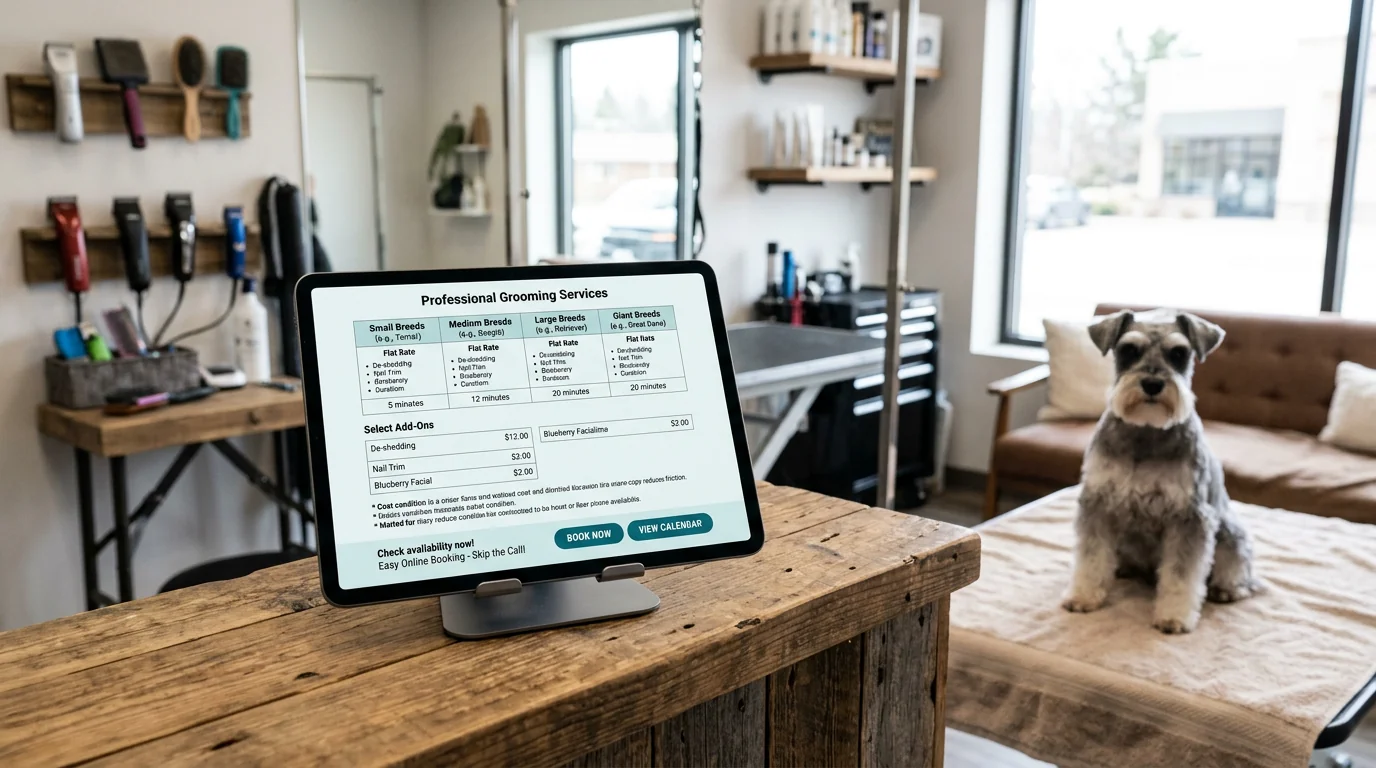
Table of Contents +
- Why transparent grooming tiers reduce friction at checkout
- Blueprint: size/breed-based tables with add-ons and disclaimers
- Quick decision guide: if X, then Y
- Booking prompts that feel natural, not pushy
- Monitoring and iteration: what to check at 7-14 days and 4-8 weeks
- Practical safety boundaries for pricing and promises
- Evidence status: what’s well-supported vs. context-dependent
- Implementation checklist for your grooming pricing page
- Where this fits in grooming SEO
- Frequently Asked Questions
- Conclusion
- References
Design grooming pricing pages with size/breed tiers, add-ons, and clear booking prompts. Reduce friction, set expectations, and lift online conversions.
Confusing grooming prices cause friction and hesitation. Phone-only quotes slow decisions and send prospects elsewhere. Clear, skimmable pricing earns trust and bookings.
Transparent grooming pricing tiers clarify expectations and reduce support calls. They may expedite checkouts and lower no-shows. In this guide, you will learn how to structure breed size pricing, grooming add-ons, disclaimers, and micro-copy to reduce friction and drive online bookings.
Why transparent grooming tiers reduce friction at checkout
Common failure patterns: phone-only quotes and vague ranges
Phone-only pricing forces extra effort and introduces inconsistent quotes. Vague ranges hide the real total and cause sticker shock. Unlabeled surcharges frustrate owners. Unclear timing or policies amplify abandonment. Poor scannability on mobile blocks commitment and invites price shopping.
What evidence suggests about clarity, trust, and conversions
Pricing pages that explain logic and exceptions may increase perceived fairness and decrease uncertainty, which can support higher conversion. Service design research highlights mapping the process and scenarios to reduce friction online.[2] Pricing guidance also emphasizes transparency and rationale when premiums apply.[3] Familiarity with services affects use, suggesting clarity can support adoption.[1]
Petbase writes and publishes this kind of content automatically - 10 SEO articles per month for pet businesses - start your free trial.
Blueprint: size/breed-based tables with add-ons and disclaimers
Tier logic: XS-XL with breed exemplars and hair/coating notes
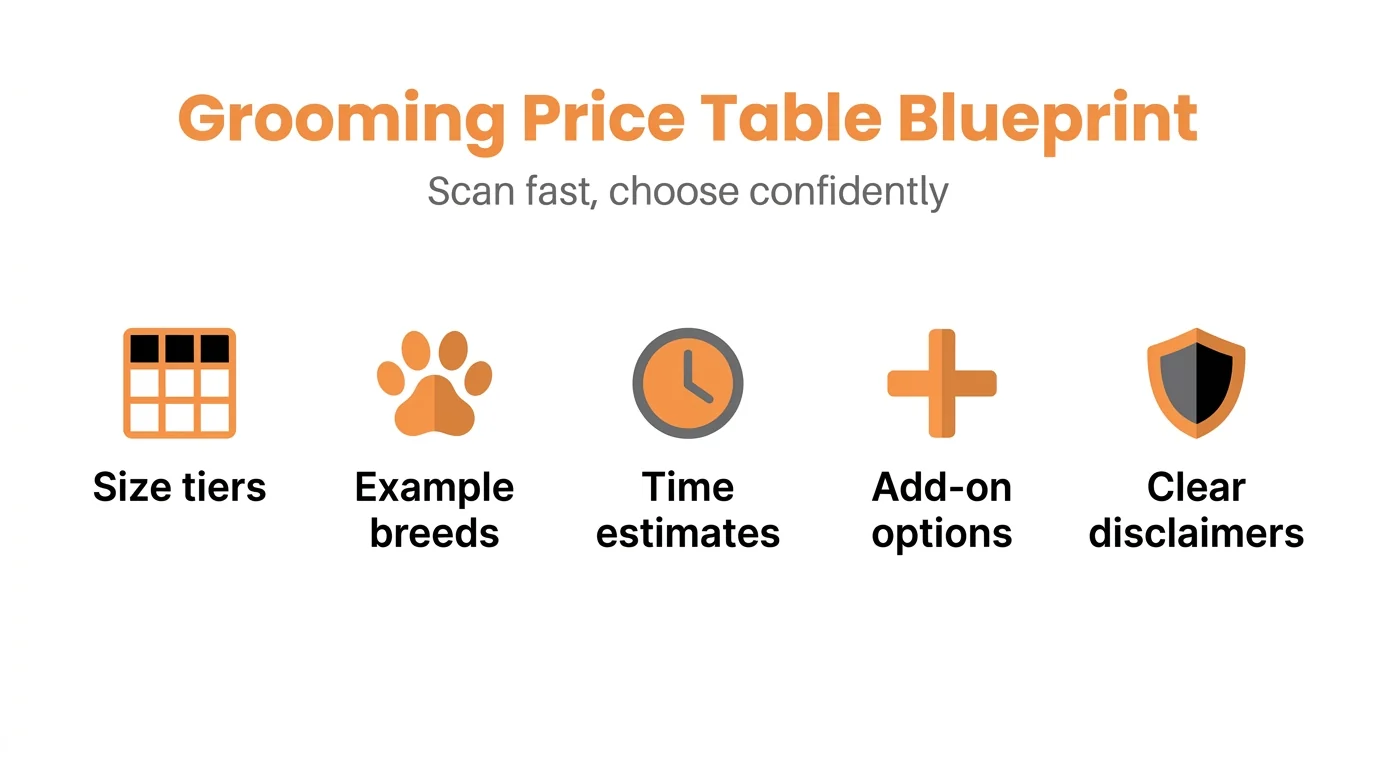
Start with a compact grooming price table using XS-XL tiers. Add exemplar breeds, coat notes, a base range, and time estimate. Keep line items short and scannable on mobile. Here is a practical structure you can adapt.
| Tier | Example Breeds | Coat Notes | Base Price Range | Time Window |
|---|---|---|---|---|
| XS | Chihuahua, Toy Poodle | Short/fine or light curly | $45-$60 | 60-90 minutes |
| S | Cavalier, Mini Doodle | Silky or moderate curl | $55-$75 | 75-105 minutes |
| M | Spaniel, Standard Terrier | Feathering or wire coat | $65-$90 | 90-120 minutes |
| L | Retriever, Large Doodle | Dense undercoat or heavy curl | $80-$110 | 120-150 minutes |
| XL | Giant breeds | Heavy coat or double coat | $95-$140 | 150-180 minutes |
Add-ons and surcharges: matting, hand-stripping, deshedding
List grooming add-ons with straightforward triggers and ranges. Keep labels consistent across the page and booking form. Use ranges to account for coat severity and groom time.
| Add-On | Trigger | Typical Fee |
|---|---|---|
| Deshedding | Moderate to heavy undercoat | $15-$35 |
| Matting Care | Tangles or felted areas | $20-$60 |
| Hand-Stripping | Wire coats needing technique | $30-$70 |
| Special Handling | Anxiety or safety needs | $15-$40 |
| Express Groom | No kennel wait, direct service | $15-$30 |
Micro-copy that preempts objections (time, coat condition, behavior)
Use short, empathetic notes that explain why a fee exists. Examples:
- “Times reflect coat condition on arrival. We confirm at check-in.”
- “Matting requires extra time for comfort and safety. We will discuss options.”
- “Special handling supports a calmer experience when anxiety or reactivity is present.”
Quick decision guide: if X, then Y
Pricing uncertainty, coat variability, or behavioral flags
- If the coat is between sizes, book the higher tier and adjust at check-in.
- If matting is visible, add Matting Care and budget the upper range.
- If the pet is anxious, add Special Handling and choose a longer window.
- If wire coat and style matter, select Hand-Stripping instead of clip.
- If shedding is seasonal, add Deshedding and consider an earlier slot.
Multi-pet, first-time clients, or seasonal spikes
- If it is your first visit, plan five extra minutes for style notes.
- If you have multiple pets, book back-to-back slots in the same tier.
- If it is peak season, book two weeks earlier to secure preferred times.
- If you are price-sensitive, choose bath-only for maintenance between grooms.
- If cancellations are common in your area, enable a 24-hour confirmation text.
Booking prompts that feel natural, not pushy
Primary vs. secondary prompts by device
On desktop, place one primary “Book Grooming” button above the fold and a secondary text link in the header. On mobile, use a compact sticky bar with one concise call-to-action to avoid clutter.
Inline prompts near each tier and add-on
Insert a small “Book XS” or “Add Deshedding” control next to each line. Owners decide in context, reducing backtracking. Pet grooming booking prompts should carry the selected tier into checkout to preserve momentum.
Accessibility and trust signals near the booking button
Place accepted payments, cancellation window, and estimated duration beside the button. Include alt text, high-contrast colors, and focus states. A line that prices may adjust after check-in sets proper expectations without deterring action.
Monitoring and iteration: what to check at 7-14 days and 4-8 weeks
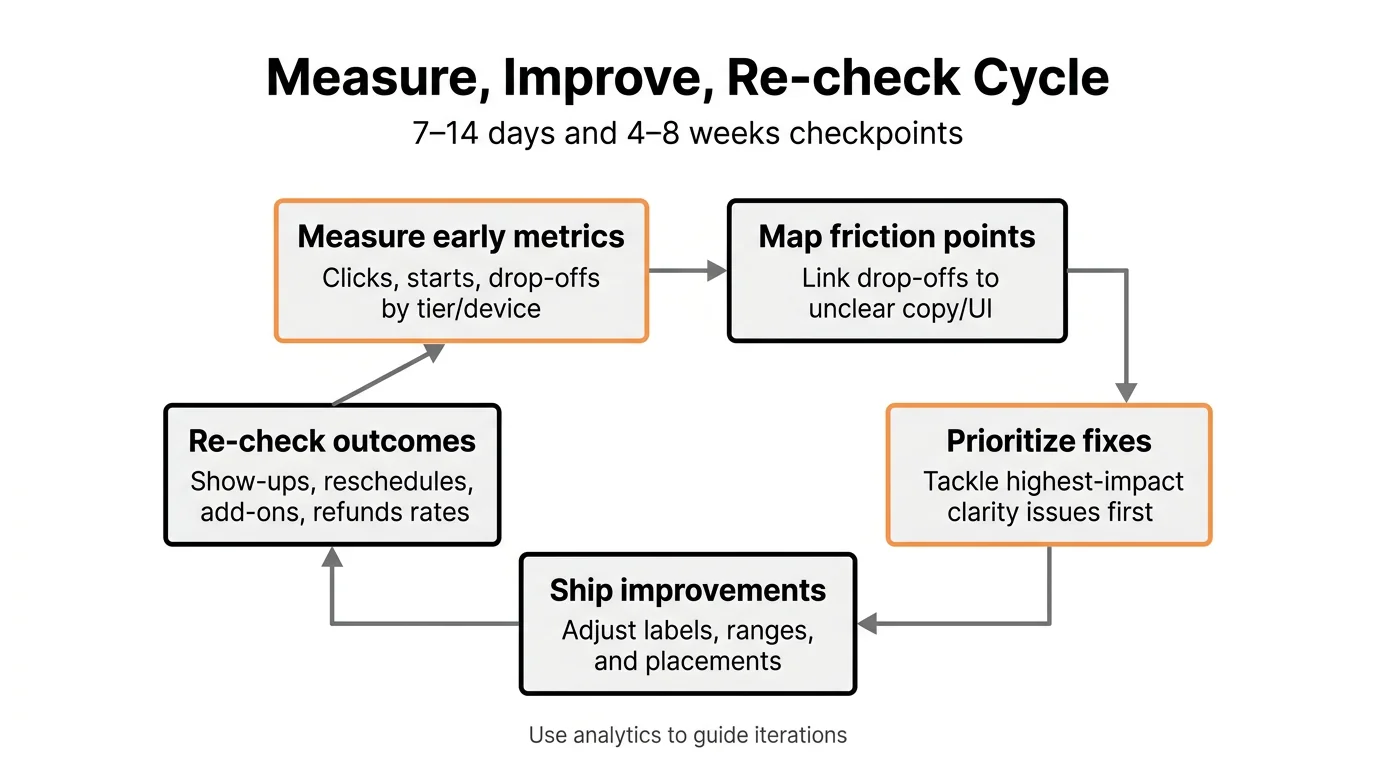
Near-term indicators: click-through and abandonment
Track click-through from the pricing table to the booking form, mobile vs. desktop starts, and abandonment by tier. Map drop-offs to confusing micro-copy and revise. Attribute events to understand funnel health over time.[2] For KPI structure, see measurement approaches for grooming bookings.
Mid-term signals: show-up rates, upsell acceptance, refunds
After four to eight weeks, review show-up rates, reschedules, add-on acceptance, and refunds. Evidence links satisfaction and spending to clarity and value framing, which may reduce disputes and no-shows.[4] If refunds increase, refine disclaimers and photo examples.
Practical safety boundaries for pricing and promises
Estimate ranges, time windows, and behavior policies
Use narrow ranges per tier and publish time windows by size. Post a calm, direct behavior policy describing pause points and escalation steps. Explain that coat condition, health, and safety may modify pricing upon arrival.[3]
Payment holds, late pickups, and medical disclaimers
State card holds for new clients, late pickup fees, and who contacts an emergency clinic if needed. Keep medical disclaimers clear and empathetic. Confirm owners authorize drying methods and tools appropriate to coat and comfort.
Evidence status: what’s well-supported vs. context-dependent
Clarity and trust cues
Consistent labels, transparent ranges, and short rationales may increase perceived fairness and trust, encouraging action.[3] Familiarity with processes and expectations also correlates with higher service utilization, supporting explicit, scenario-based explanations.[1]
Tables vs. calculators
Tables are fast to scan and reduce cognitive load for most visitors. Calculators may help when variables are complex or regional. Service design literature encourages modeling user scenarios before choosing a tool.[2]
Prompt placement and mobile UX
Above-the-fold prompts and persistent mobile bars often aid decisions. Yet, optimal placement varies with audience and screen mix. Test one change at a time and monitor engagement deltas by device type and tier.
Implementation checklist for your grooming pricing page
Content, design, and technical SEO essentials
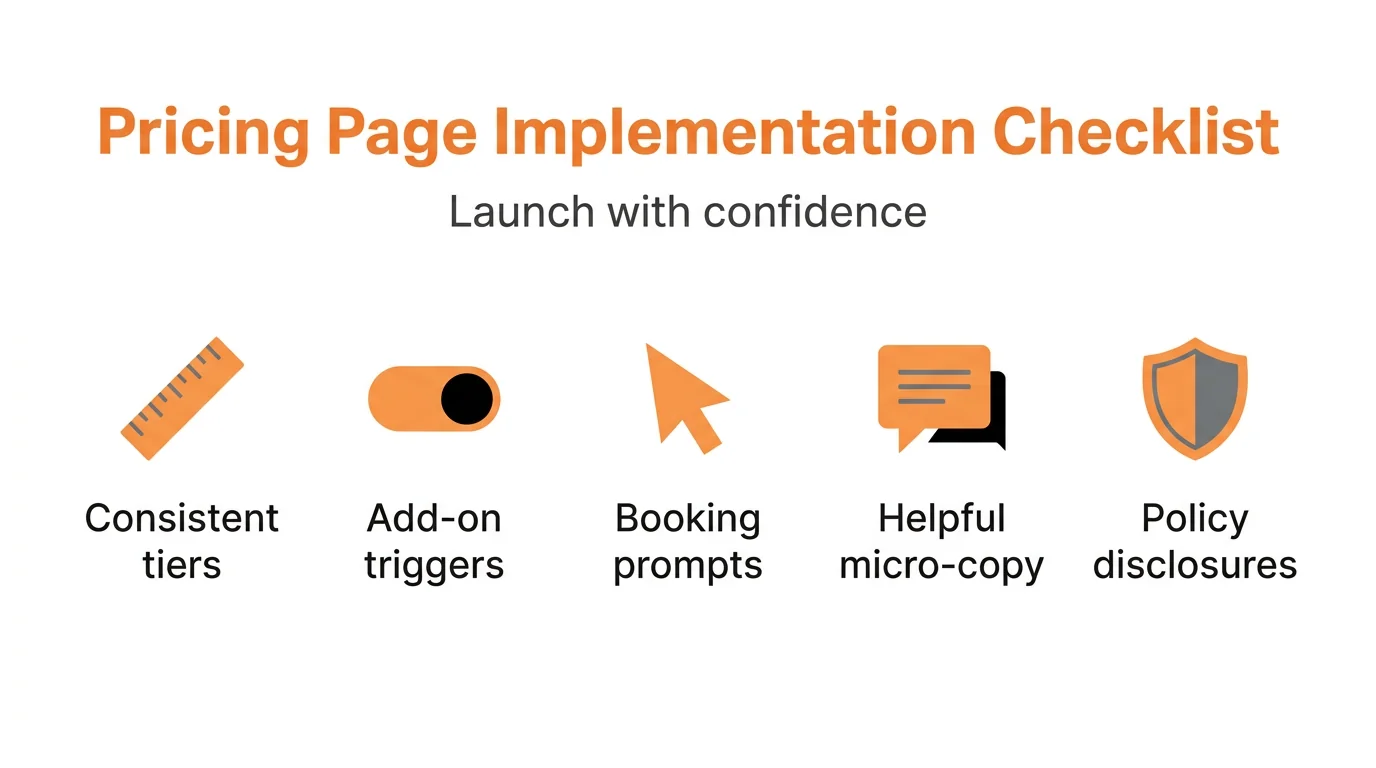
- Publish grooming pricing tiers XS-XL with exemplar breeds and coat notes in a responsive table.
- Pair each tier with grooming add-ons and clear triggers, then mirror them in the booking flow.
- Write empathetic micro-copy near prices to explain time, safety, and condition-based adjustments.
- Use concise headings, mobile-first spacing, and large tap targets for inline booking actions.
- Add internal links that support action, such as on-page SEO improvements for titles and schema.
- For recurring updates and structured copy, some teams find Petbase AI useful for maintaining pricing content and publishing workflows.
Schema markup: service, FAQ, and local business details
- Implement Service schema for grooming with priceRange and areaServed where applicable.
- Mark up FAQs using FAQPage schema to reinforce clarity and reduce calls.
- Ensure LocalBusiness and openingHours are accurate and consistent with your profiles; coordinate with Google Business Profile optimization.
Where this fits in grooming SEO
Connect pricing UX to discovery, intent, and conversion
Pricing pages sit at the intent-to-book moment. Clear breed size pricing and immediate booking prompts shorten the path from search to checkout. For broader context, see our grooming SEO guide that connects discovery to conversion.
Next steps to strengthen the cluster
Align your pricing page with nearby service and location content. Add internal links to neighborhood pages and service details. When measuring impact, review attribution approaches within SEO KPIs for grooming shops to tie bookings to changes.
Frequently Asked Questions
Should I list exact grooming prices or ranges?
Evidence suggests listing tiered base prices with narrow ranges may reduce confusion while allowing for coat condition or behavior adjustments. Pair each tier with clear add-on fees and brief disclaimers.
How many pricing tiers are best for a grooming site?
Four to five size/breed tiers (XS-XL) with exemplar breeds often balance clarity and choice. Too many tiers may slow decisions; too few may cause sticker shock for large or high-maintenance coats.
Where should booking prompts go on the pricing page?
Place a primary prompt above the fold and inline buttons next to each tier and add-on. On mobile, persistent but compact booking bars may support quicker actions without crowding content.
How do I handle matted coats and special handling fees?
State an estimated surcharge range and the triggers (severity, time, safety). A brief, empathetic note may set expectations while keeping room for groomer assessment at check-in.
Do calculators convert better than tables for grooming pricing?
Results vary. Tables with clear tiers are fast to scan; calculators may help when coat variables are complex. Testing both formats over a few weeks may indicate which option fits your audience.
Conclusion
Clear grooming pricing tiers, add-on logic, and considerate micro-copy reduce ambiguity. They may lower calls and drive more online bookings. Start with a concise XS-XL table, transparent surcharges, and device-appropriate prompts. Monitor behavior at 7-14 days and 4-8 weeks, then iterate carefully. By aligning transparency, booking UX, and structured data, your pricing page can earn trust and convert with consistency.
References
- C Bir et al. (2020). Familiarity and use of veterinary services by US resident dog and cat owners. Animals. View article
- F Jian et al. (2021). Research on Pet Business Strategy and Service Design in Internet Economy. … on Management, Economy and Law (ICMEL …. View article
- L Ackerman (2021). Approach to Pricing. Pet-Specific Care for the Veterinary Team. View article
- A Williams et al. (2020). The impact of pet health insurance on dog owners' spending for veterinary services. Animals. View article