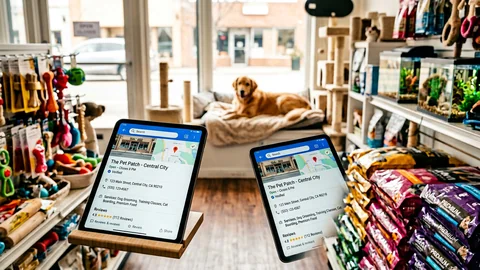
Grooming Business SEO: The Complete Orientation Hub for Local Growth

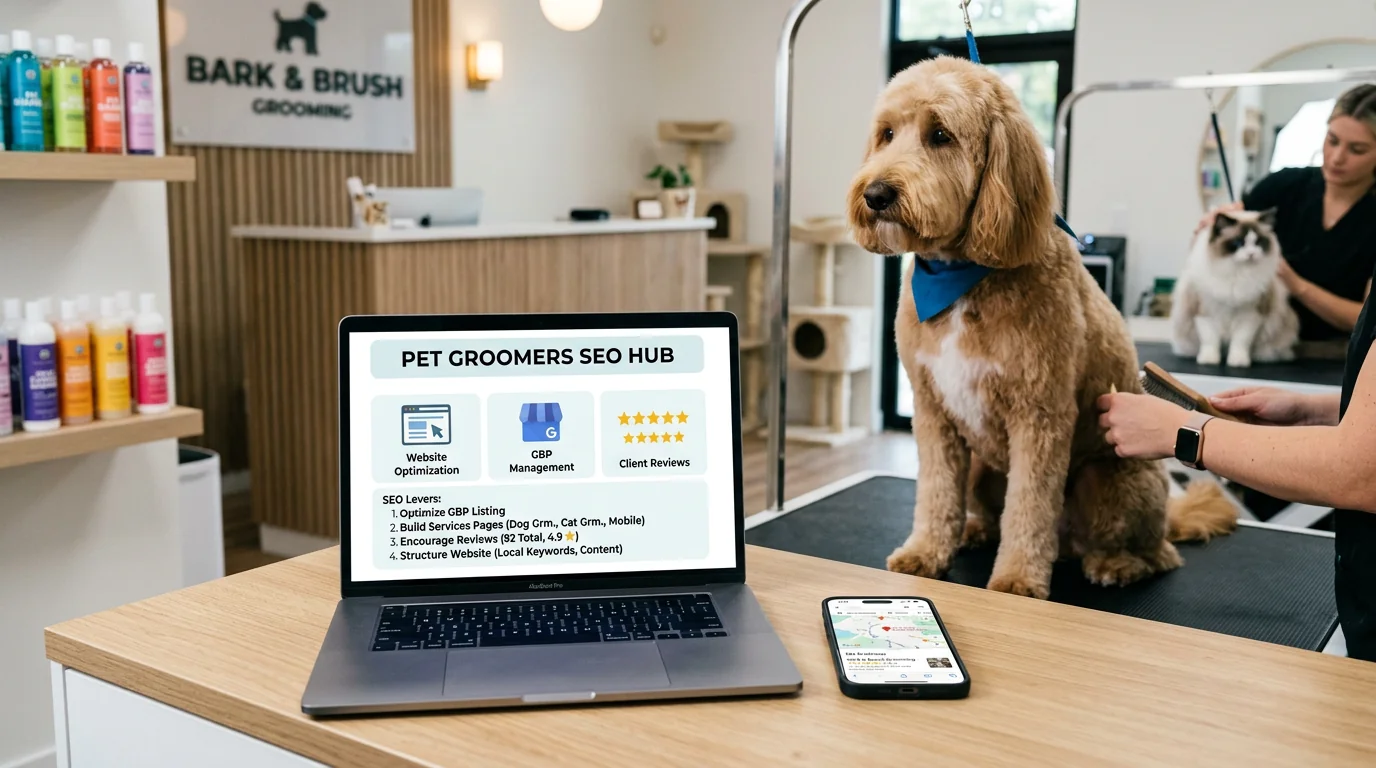
Table of Contents +
- What to prioritize first for local grooming SEO
- Website architecture that supports conversions and visibility
- Reputation signals: reviews, photos, and E-E-A-T basics
- Geo-targeting: winning ‘near me’ and multi-location searches
- Content cadence: publish helpful grooming topics, not fluff
- On-page optimization and internal linking essentials
- Off-page basics, measurement, and how we built these guidelines
- Frequently Asked Questions
- References
A concise hub for dog and cat grooming SEO. Prioritize GBP, service pages, reviews, and location strategy to win local search and convert traffic.
Local search drives the majority of grooming bookings today. Winning visibility requires structure, not guesswork.
This guide orients you to the levers that matter. You will learn priorities, pitfalls, and routes to action. Expect clear rules for local SEO, content, and conversion.
What to prioritize first for local grooming SEO
Understand: The core levers that move rankings and bookings
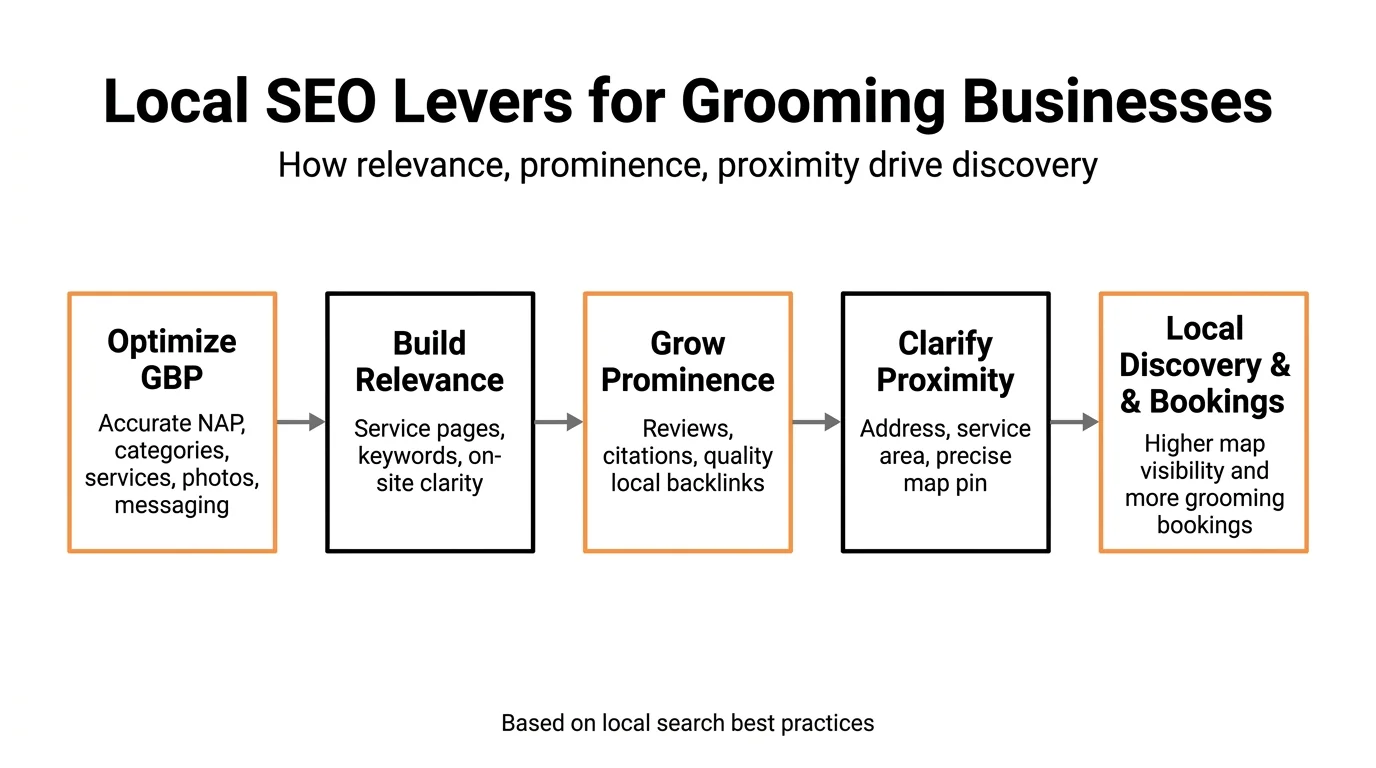
Local discovery depends on three controllable levers: relevance, prominence, and proximity. Your Google Business Profile for groomers defines core facts, categories, and service areas. Your website reinforces services and credibility. Reviews drive trust and clicks.
In local SEO for groomers, small, consistent improvements usually outperform complicated early tactics. Research on local search methods shows incremental, well-targeted changes reliably improve outcomes over time.[3]
Do not implement yet: Advanced schema or content automation without basics
Skip micro-optimizations and bulk content until your fundamentals are correct. Perfect the profile, NAP consistency, and essential grooming service pages first. Amplify only after the foundation converts visitors into bookings.
Route: Set up your Google Business Profile to rank in the local map pack
Set up your Google Business Profile to rank in the local map pack.
- Optimize and maintain your Google Business Profile with accurate NAP, categories, and services.
- Publish focused grooming service pages that answer intent and drive bookings.
- Build a steady reviews flywheel with owner photos and detailed feedback.
Petbase builds this SEO foundation automatically for pet businesses - 10 optimized articles published every month - start your free trial.
Website architecture that supports conversions and visibility
Understand: Clear service pages beat generic homepages
Dedicated grooming service pages outperform one-size-fits-all homepages. They align with high-intent searches like “dog nail trim near me” and “cat mat removal.” They also increase conversion through pricing clarity, FAQs, and booking prompts.
For dog grooming SEO and cat grooming SEO, map each core service to its own page. Reinforce process, safety, and outcomes. Then support conversion with transparent pricing models-see Price page best practices that reduce calls and increase bookings.
Do not implement yet: Complex siloing or programmatic pages
Do not over-engineer site structure with deep silos or mass-generated pages. Start with a lean, logical navigation. Expand only when user demand and data justify it.
Route: Create high-intent grooming service pages that actually convert
Create high-intent grooming service pages that actually convert.
Reputation signals: reviews, photos, and E-E-A-T basics
Understand: Consistent, specific reviews drive trust and clicks
Volume, velocity, and specificity of reviews shape both rankings and conversions. Include owner-uploaded photos and detailed comments about service quality, timing, and care. Variation in content and ongoing updates tend to improve systems that learn over time.[4]
Do not implement yet: Incentivized reviews or gated flows
Avoid discounts for reviews, gated links that suppress negatives, or opaque moderation. These tactics risk policy violations and erode long-term trust signals.
Route: Launch a reviews flywheel for ongoing trust signals
Launch a reviews flywheel for ongoing trust signals.
Geo-targeting: winning ‘near me’ and multi-location searches
Understand: Location pages clarify relevance and service area
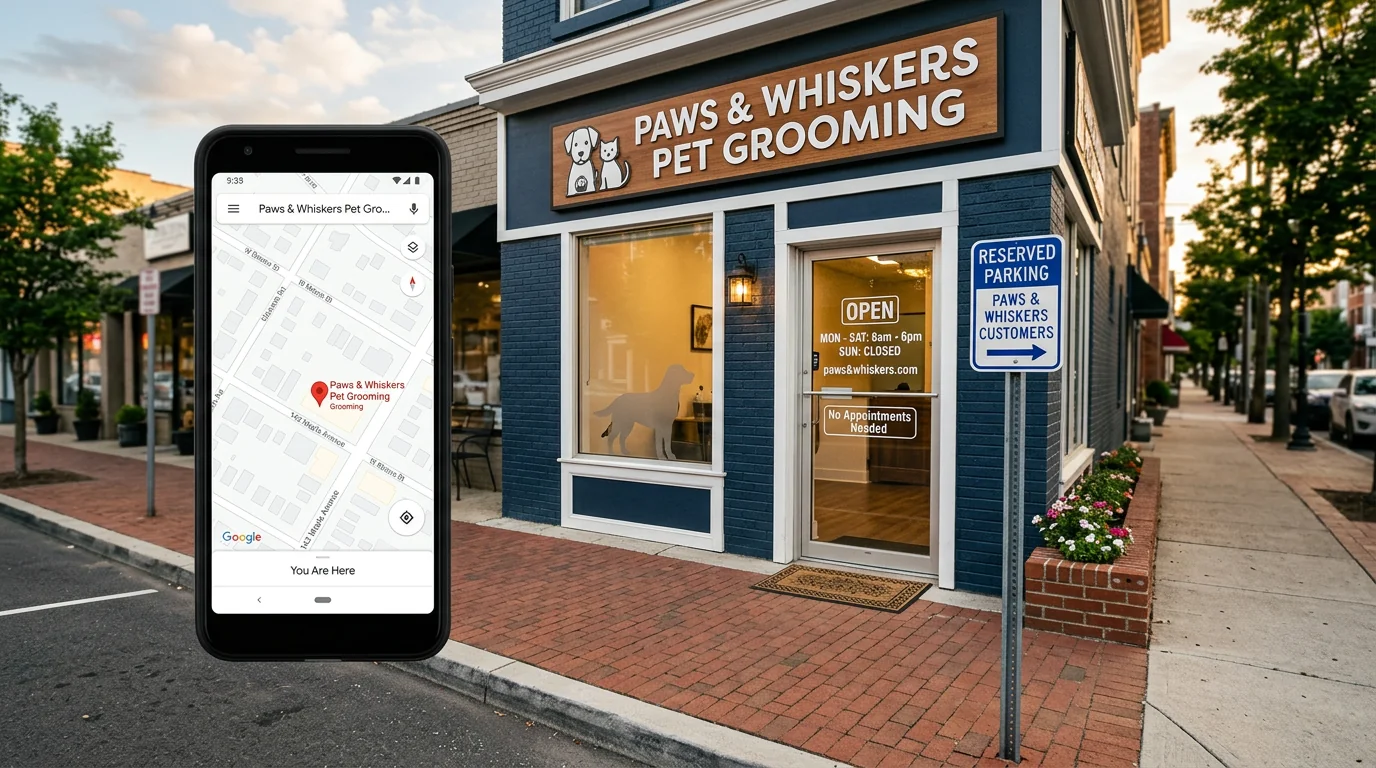
Location pages align your NAP, embedded map, hours, and parking details with nearby searches. For service-area businesses, clarify where you operate and which neighborhoods you serve. Keep the page focused, unique, and useful.
Do not implement yet: City-stuffed doorway pages
Do not create thin, near-duplicate pages for every city. Search systems often devalue repetitive features. Penalizing overused patterns is a known optimization approach that improves solution quality in many domains.[1]
Route: Build a location page that wins ‘near me’ searches
Build a location page that wins ‘near me’ searches.
Content cadence: publish helpful grooming topics, not fluff
Understand: Weekly posts that answer real owner questions
Publish short, practical articles addressing seasonal care, appointment prep, and aftercare. Target local modifiers and service-related queries. A steady cadence strengthens topical authority for dog grooming SEO and cat grooming SEO.
Do not implement yet: Long encyclopedias or breed megaguides
Large reference libraries rarely move local visibility without demand. Prioritize content that reduces booking friction, educates owners, and supports specific services you sell.
Route: Write one grooming blog post per week with proven topic templates
Write one grooming blog post per week with proven topic templates. For repeatable scheduling and pet-specific research, many teams use Petbase AI as an assistant for outlines and drafts while keeping brand voice in control.
On-page optimization and internal linking essentials
Understand: Simple, consistent on-page signals win locally
Use clear titles, H1s, and concise meta descriptions. Keep NAP consistent sitewide. Link service pages from the homepage and related content. Weighting multiple small signals often yields stronger outcomes than any single factor alone.[2]
Do not implement yet: Aggressive keyword density or AI overuse
Keyword stuffing, unnatural internal links, and generic AI text harm trust and engagement. Favor clarity and helpfulness, then refine with measured iterations over time.
Route: On-page SEO checklist for grooming sites
On-page SEO checklist for grooming sites.
Off-page basics, measurement, and how we built these guidelines
Understand: Citations, NAP consistency, and focused KPIs
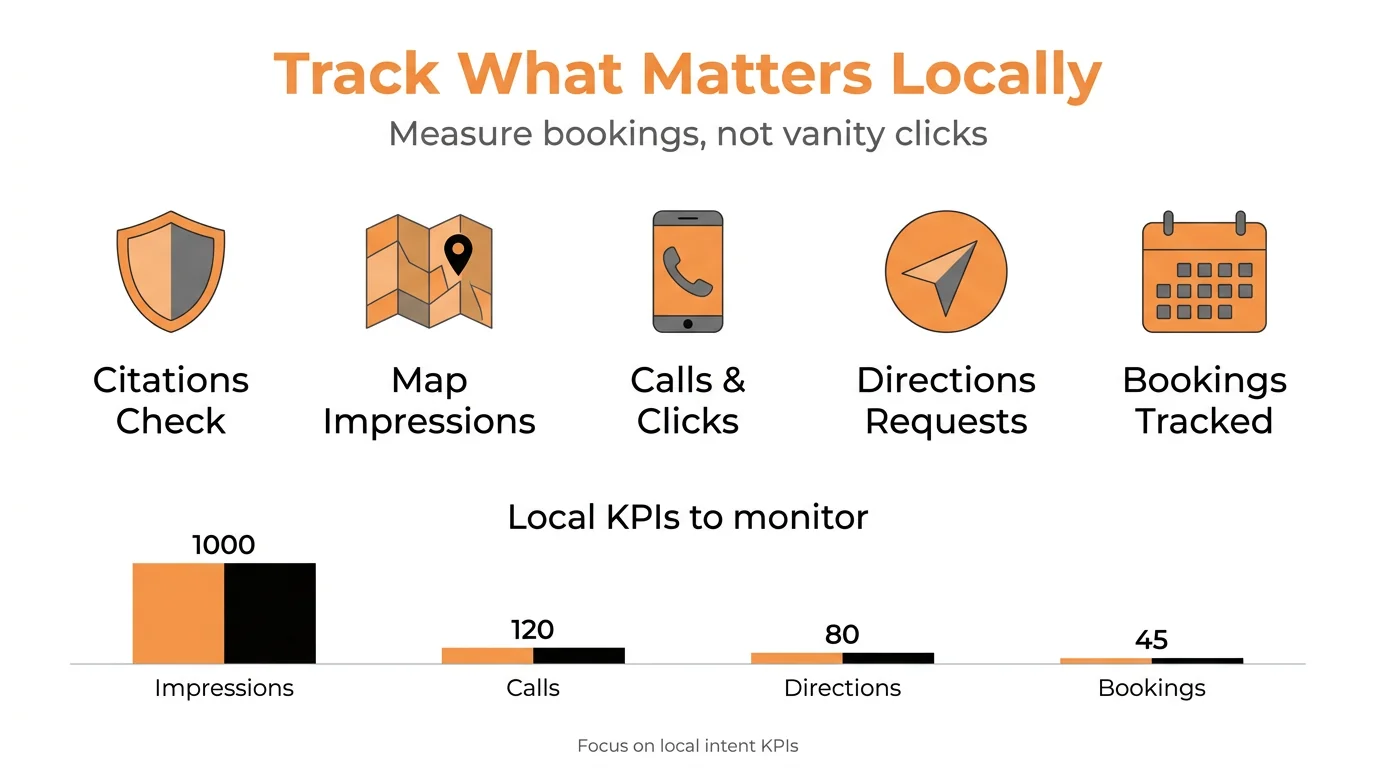
Accurate citations across reputable directories reinforce trust and map visibility. Track map pack impressions, calls, direction requests, and bookings. Iterative improvements, measured against focused KPIs, outpace guesswork over time.[3]
Do not implement yet: Link buying or vanity metrics
Avoid paid link schemes and chasing generic traffic without local intent. Focus investment where it supports bookings and loyalty.
Route: Local citations and NAP cleanup for groomers; Track what matters: SEO KPIs for grooming businesses
Local citations and NAP cleanup for groomers; Track what matters: SEO KPIs for grooming businesses.
Frequently Asked Questions
How long does local SEO take for a grooming business?
Timelines vary by market competition and existing assets. Most groomers see meaningful map pack and organic improvements after foundational fixes across GBP, reviews, and service pages.
What matters more: website or Google Business Profile?
Both matter, but for local discovery the Google Business Profile often moves the needle faster. Your website then converts and expands reach beyond the map pack.
Do I need separate pages for each grooming service?
Yes. Dedicated pages for core services help match high-intent queries and clarify pricing, process, and FAQs-improving both rankings and conversions.
Are location pages necessary for a single shop?
A single, well-structured location page still helps. It aligns NAP details, embeds a map, clarifies service area, and improves ‘near me’ relevance.
Which metrics should groomers track for SEO?
Track map pack impressions, calls, direction requests, organic clicks to service pages, bookings, and review volume/velocity. Avoid focusing on generic traffic alone.
Use this hub to choose the next best move, not everything at once. Nail your profile, build targeted grooming service pages, earn reviews, and iterate with data-driven confidence.
References
- C Voudouris et al. (2025). Guided local search. Handbook of Heuristics. View article
- I Ahmadianfar et al. (2022). INFO: An efficient optimization algorithm based on weighted mean of vectors. Expert Systems with …. View article
- E Aarts et al. (2018). Local search in combinatorial optimization. 2018 - books.google.com. View article
- HH Hoos et al. (2018). Stochastic local search. Handbook of approximation algorithms and …. View article