Weekly Content Plan for Groomers: 12 Blog Templates that Drive Bookings


Table of Contents +
- Why a weekly template system may boost consistent bookings
- The 12 blog templates (fill-in frameworks + keyword patterns)
- Weekly cadence: 4-week rotation you can repeat all year
- Quick decision guide: if X, then publish Y this week
- On-page structure: reusable outline and keyword modifiers
- Internal linking and media: turn reads into appointment interest
- Monitoring guidance: what to watch at 7-14 days and 4-8 weeks
- Practical safety boundaries for grooming advice content
- Evidence status: what’s consensus vs. still emerging
- How this supporting post fits the main grooming SEO hub
- Frequently Asked Questions
- Conclusion
- References
Solve content paralysis with 12 reusable grooming blog templates. Map topics to keywords, posting cadence, and CTAs to steadily increase bookings.
Blank pages waste prime booking opportunities. A simple weekly content system helps you publish on time and speak directly to local grooming intent. It removes guesswork and builds reliable visibility.
This matters because consistent search visibility often converts to appointment interest. You will learn 12 repeatable blog templates, practical keyword patterns, and safe calls-to-action you can deploy weekly without stalling or overthinking topics.
Why a weekly template system may boost consistent bookings
When content topics are pre-decided, you spend time executing, not debating. A template system aligns grooming blog ideas with search behavior and reduces burnout. It also keeps your pet grooming content calendar steady and realistic.
One scenario: groomers stuck on what to publish next
Scheduling slips when ideas dry up. Templates pre-define angle, assets, and CTA, so you can focus on photos, quick notes, and publication. This rhythm supports predictable visibility during high-demand seasons.
How templates reduce decision fatigue and align with search intent
Each template maps to a clear question owners ask. Search-matched structures guide keywords, headings, and local modifiers. Evidence indicates automation and templating can effectively scale SEO-driven content production.[1]
Petbase writes and publishes this kind of content automatically - 10 SEO articles per month for pet businesses - start your free trial.
The 12 blog templates (fill-in frameworks + keyword patterns)
1) Seasonal coat care planner (spring shed, summer shave myths, winter paw care)
Target “season + coat care + city.” Offer monthly tasks, salon timing, and myth clarifications. CTA: encourage pre-season appointments. Add images comparing seasonal undercoat density. Useful keywords: “spring shedding tips,” “winter paw balm.”
2) Breed-specific grooming spotlight (structure for any breed)
Target “breed + grooming + city.” Cover coat type, problem areas, styling preferences, and frequency. CTA: link to your breed gallery. Add quick maintenance video. These breed-specific grooming posts often attract high-intent owners.
3) First-groom checklist for puppies or rescues
Target “first groom checklist + city.” Outline step-by-step prep, documents, and comfort items. Include socialization tips and a realistic time range. CTA: book an intro session. Add a printable PDF for easy sharing.
4) Matting prevention routine (home care + salon cadence)
Target “matting prevention + coat type + city.” Provide brush types, cadence, and dematting boundaries. CTA: schedule maintenance grooms. Add tool photos and short demonstrations. Emphasize humane handling and early intervention to prevent discomfort.
5) Before/after case study (photo sequence + outcomes)
Target “grooming transformation + city.” Share a concise story: condition on arrival, steps taken, time, and results. CTA: consultation for similar cases. Use alt text describing coat condition and improvements for visual search.
6) Grooming frequency guide by coat type
Target “grooming frequency + coat type + city.” Provide ranges by coat (smooth, double, curly, wire). CTA: recommend a recurring plan. Add a table summarizing intervals and home-care touchpoints between salon visits.
7) At-home maintenance kit list (brushes, shampoos, tools)
Target “grooming kit + coat type + city.” List 5-7 vetted items. Provide usage frequency and safety tips. CTA: book a tool fit consult. Include affiliate disclosures if relevant and emphasize gentle techniques.
8) Allergy/skin sensitivities grooming approach
Target “allergy-friendly grooming + city.” Discuss fragrance-free, hypoallergenic options, and rinse practices. CTA: sensitivity consult. Avoid diagnostic claims. Use careful language and recommend veterinary collaboration when reactions persist.
9) Nail and paw health mini-guide
Target “nail trim + paw care + city.” Explain safe length, signs of overgrowth, and seasonal paw checks. CTA: quick trim slots. Demonstrate handling position photos. Mention grinder vs clipper considerations with caution.
10) Senior dog comfort grooming
Target “senior grooming + city.” Address joint support, table time, break frequency, and drying temperature. CTA: comfort session assessments. Use non-slip mat photos. Emphasize lower-stress handling and pace adjustments.
11) Cat grooming myths and handling tips
Target “cat grooming + city.” Clarify coat types, matting risks, and stress-reduction techniques. CTA: inquiry form for temperament assessments. Note appointment length variances and safety steps like minimal restraint.
12) Event/holiday grooming timeline (boards, shows, holidays)
Target “holiday grooming + timeline + city.” Provide book-by dates, prep tasks, and finishing touches. CTA: reserve slots early. Include a downloadable calendar. Add reminders for travel-related grooming requirements.
Weekly cadence: 4-week rotation you can repeat all year
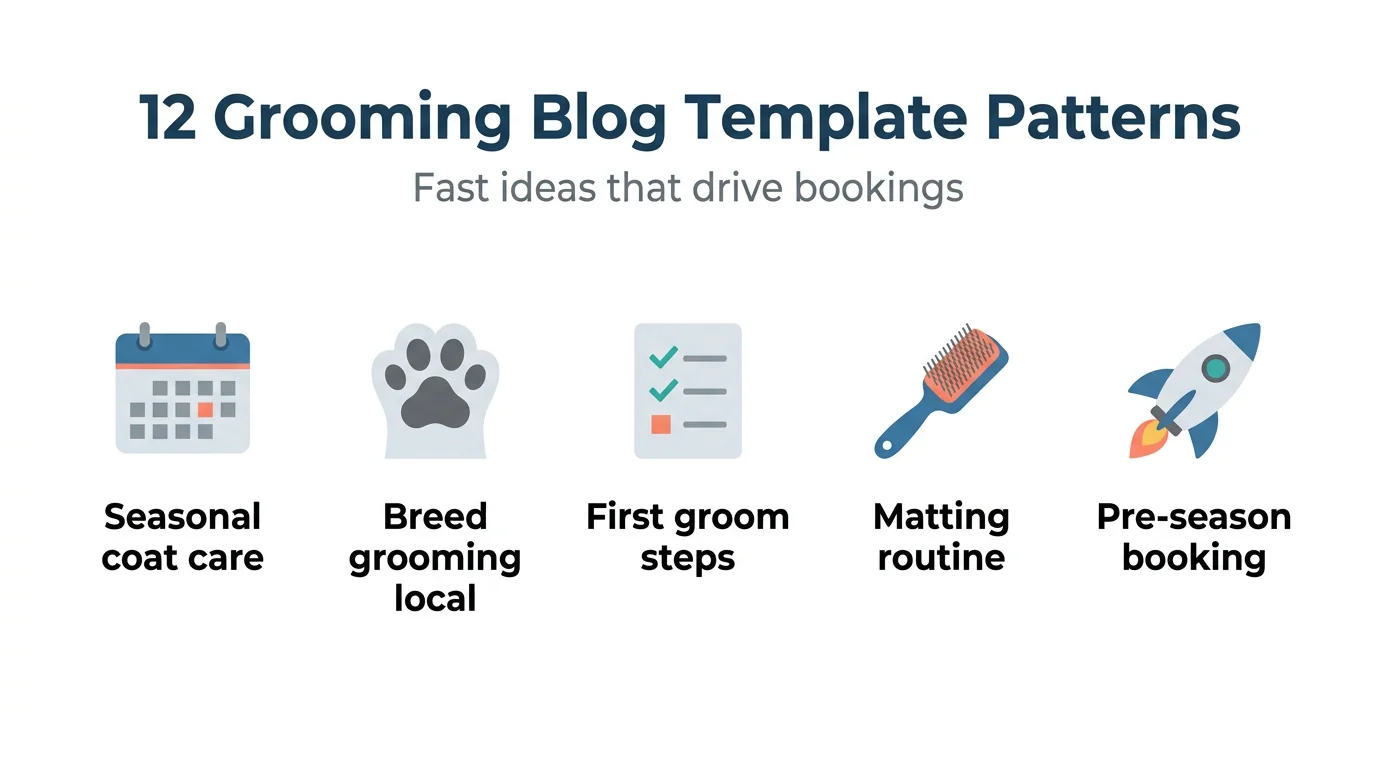
Rotate templates across four weeks to cover seasonal relevance, care depth, and conversion intent. A rotation stabilizes effort and keeps topics fresh. Automation for topic research and scheduling may enhance consistency at scale.[4]
Week-by-week outline: template picks, keyword targets, and image needs
Week 1: Seasonal planner + local modifiers, outdoor coat photos. Week 2: Breed spotlight + gallery. Week 3: First-groom or matting routine, checklist PDF. Week 4: Case study or frequency guide with table and alt-tagged images.
For faster execution, many shops use Petbase AI to auto-generate outlines and drafts that match grooming business SEO patterns while maintaining a predictable schedule.
Quick decision guide: if X, then publish Y this week
- If phones spike with shedding questions, publish Seasonal coat care planner targeting “spring shedding + city.”
- If a specific breed dominated bookings, publish Breed-specific grooming spotlight with “breed + grooming + city.”
- If new pet inquiries rise, publish First-groom checklist with a gentle onboarding CTA.
- If photos show frequent tangles, publish Matting prevention routine with “coat type + matting + city.”
- If reviews praise transformations, publish Before/after case study highlighting similar services.
- If cancellations leave gaps, publish Nail and paw health mini-guide promoting quick-trim slots.
- If weather turns extreme, publish Allergy/skin sensitivities approach with climate details.
LLM-driven tools may also surface trending local queries to refine weekly choices efficiently.[2]
On-page structure: reusable outline and keyword modifiers
Headline and H2 patterns that fit each template
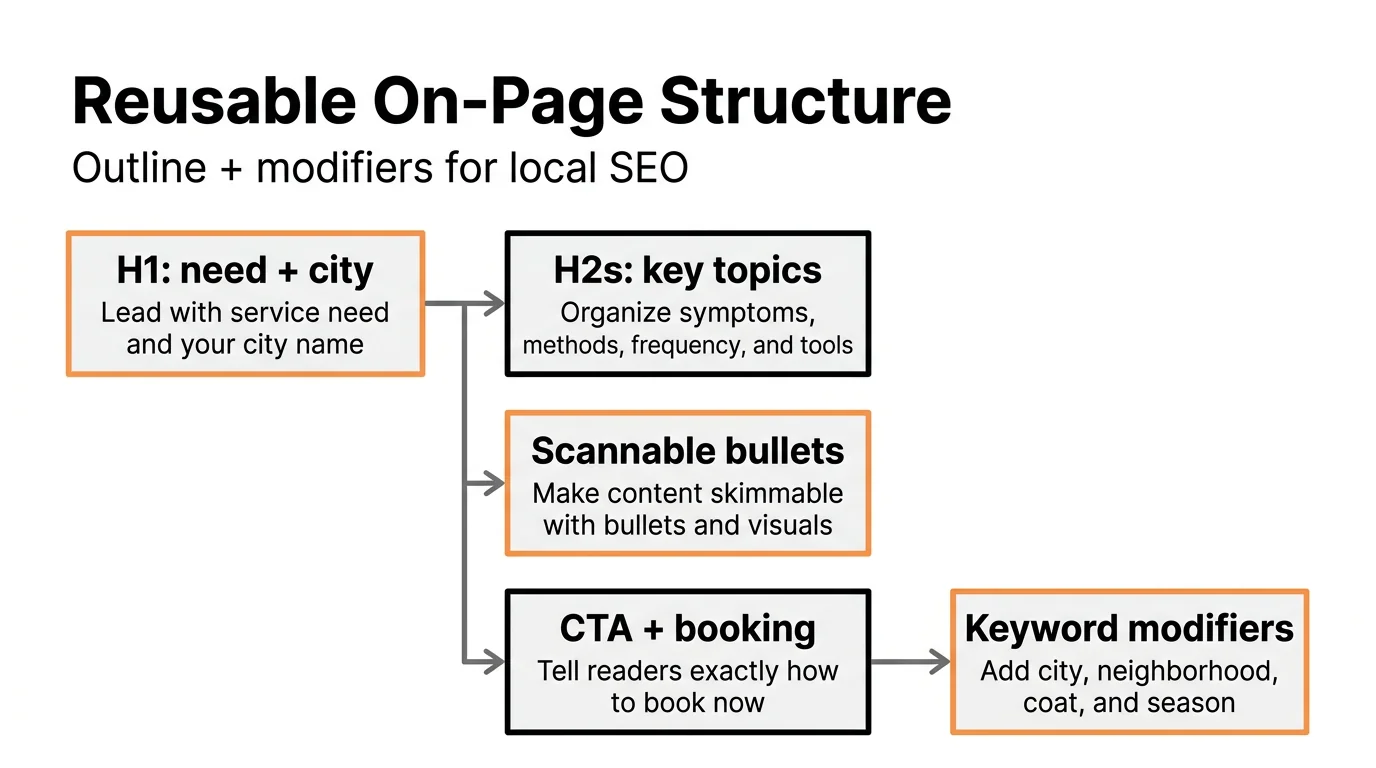
Use “Primary need + city” in the H1. Add H2s for symptoms, methods, frequency, tools, and booking steps. Create scannable bullets and a concise CTA section. End with a brief FAQ addressing owner concerns.
Local modifiers and breed/season variants to target long-tails
Combine “city + neighborhood + coat type + season.” Add climate specifics and allergens. Use variants like “mini,” “double-coat,” or “hypoallergenic.” For structure guidance, see on-page SEO patterns for grooming websites.
Internal linking and media: turn reads into appointment interest
Link each post to your service booking flow and one educational resource. Guide readers from informational intent to action with clear anchor text. Strong media and alt text signal relevance and accessibility.
Connect educational posts to high-intent grooming service pages that convert curiosity into bookings. For deeper planning, consult the grooming business SEO orientation hub to align your hub-and-spoke structure. Build authority and assistance together.
Monitoring guidance: what to watch at 7-14 days and 4-8 weeks
Early indicators (impressions, scroll depth, queries)
Within 7-14 days, check Search Console impressions, ranking deltas for long-tails, scroll-depth, and outbound clicks to service pages. SEO typically requires ongoing attention to maintain momentum and efficiency.[3]
Later signals (assisted conversions, service page landings)
At 4-8 weeks, assess new queries, service page landings, and assisted conversions. Attribution models may reveal template types driving interest. For a structured measurement approach, see SEO KPIs for grooming shops.
Practical safety boundaries for grooming advice content
Where to defer to veterinary guidance
Avoid diagnosing skin conditions or prescribing treatments. Advise owners to consult veterinarians for persistent itching, infections, or sudden coat changes. Your content should guide care routines, not replace medical evaluation.
Handling risk-prone tools and at-home instructions
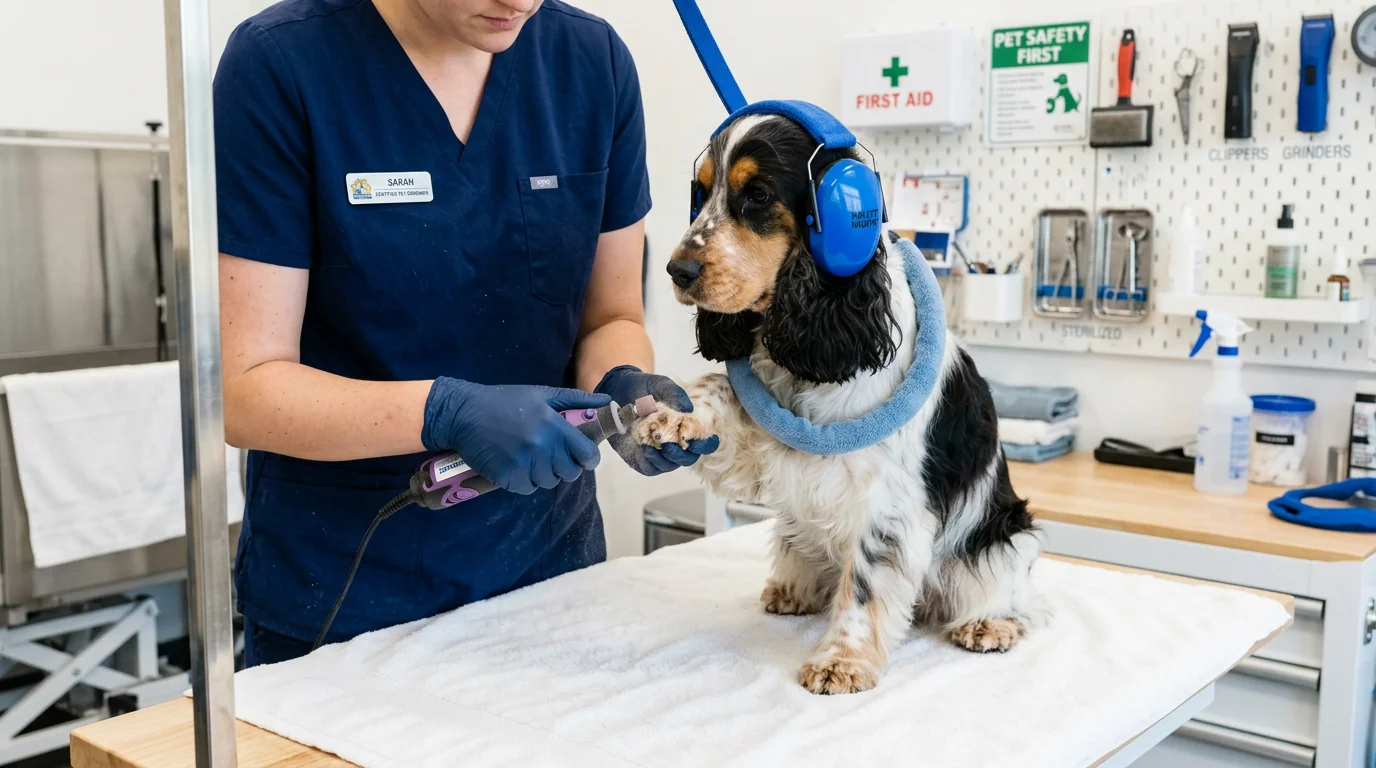
Use cautious language for clippers, scissors, and nail grinders. Emphasize low-pressure testing, proper restraint, and stop signals. Recommend professional help if pets resist, mats are tight, or nails are dark and brittle.
Evidence status: what’s consensus vs. still emerging
Areas with stronger consensus (coat care basics)
There is broad agreement on gentle brushing, detangling before bathing, temperature moderation during drying, and routine nail trims. SEO-focused content systems can reliably scale such evergreen guidance with templates.[1]
Topics where evidence is mixed (allergies, deshedding frequency)
Allergy triggers, deshedding tool cadence, and hypoallergenic product benefits vary by pet and environment. Present ranges, cite manufacturer guidance cautiously, and suggest veterinary input. Iterative content automation may assist testing angles responsibly.[4]
How this supporting post fits the main grooming SEO hub
These 12 templates serve as weekly spokes feeding your core hub pages and conversion paths. Map each post to a related service page and one educational node to form a circle of relevance.
Align the rotation with the Grooming Business SEO: The Complete Orientation Hub for Local Growth. This connection strengthens topical authority, creates intuitive navigation, and supports sustained visibility for “near me” grooming queries.
Frequently Asked Questions
How many grooming blog posts should I publish per week?
Evidence suggests one high-quality post weekly may build steady visibility for local searches. Consistency and internal linking to service pages often matter more than raw volume.
Which grooming topics tend to attract bookings fastest?
Breed-specific grooming, first-groom checklists, and seasonal coat care often capture high-intent searches. Pair these with local modifiers and clear service page links.
How do I localize grooming posts for my city?
Add city and neighborhood terms in titles, H2s, and image alt text. Include local conditions (climate, allergens) and link to your service and pricing pages.
What metrics should I track after publishing?
At 7-14 days, check impressions, clicks, and scroll depth. At 4-8 weeks, review ranking trends, service page landings, and assisted conversions in analytics.
Can I reuse the same templates every quarter?
Yes, update seasonal angles, breeds in focus, and FAQs. Refresh internal links to newer posts and refine keywords based on query data.
Conclusion
A weekly content plan for groomers should remove friction, not add it. These 12 templates, paired with clear keyword patterns and careful CTAs, create repeatable momentum. Publish consistently, monitor leading and lagging signals, and iterate without hesitation.
Use this system to prevent content paralysis and convert readers into bookings. Then strengthen structure with internal links, optimized on-page elements, and image accessibility. Sustainable, local growth comes from reliable execution over months, not bursts.
References
- M Reisenbichler et al. (2022). Frontiers: Supporting content marketing with natural language generation. Marketing …. View article
- H Xiong et al. (2024). When search engine services meet large language models: visions and challenges. IEEE Transactions …. View article
- DV Shcherbakova… (2023). SEO process automation tools. Russian Journal of …. View article
- G Gimadeev (2023). Application of the simulation modeling method for solving content marketing automation tasks. Technoeconomics. View article